 Scientific and practical peer-reviewed journal
Рецензируемый научно-практический журнал «Название журнала на русском» «Nazvanie zhurnala na russkom» зарегистрирован Федеральной службой по надзору в сфере связи, информационных технологий и массовых коммуникаций 05 августа 2014 года (Свидетельство о регистрации ПИ № ФС 77-58913 — печатное издание и свидетельство, Эл № ФС 77-58914 — сетевое издание).
Тираж 1000 экземпляров, периодичность 4 выпуска в год.
Распространение – Российская Федерация, зарубежные страны.
Электронная версия журнала с мультимедийными приложениями доступна по адресу rpmj.ru.
Выходит при поддержке Министерства здравоохранения России и Федерального государственного бюджетного учреждения «Федеральный медицинский исследовательский центр имени П.А.Герцена» Министерства здравоохранения Российской Федерации.
Журнал «Исследования и практика в медицине» - профессиональное медицинское издание, в котором отражаются результаты новейших исследований в области медицинских наук, организации здравоохранения, фундаментальных и прикладных исследований.
В издании представлен уникальный клинический опыт как практических врачей, так и специалистов разных научных и клинических школ. Публикуются новости медицинского и фармацевтического сообществ, научно-практические статьи для целевой аудитории - врачей различных специальностей.
Журнал, в первую очередь, имеет практическую направленность и публикует статьи ведущих специалистов, освещающих актуальные проблемы клиники, диагностики и лечения широкого круга заболеваний, алгоритмы диагностики и терапии различных нозологий. В нем публикуются передовые и оригинальные статьи, краткие сообщения, заметки из практики, лекции и обзоры. Мы стремимся развивать принцип междисциплинарного подхода, делаем все возможное, чтобы наши читатели были в курсе современных достижений медицинской науки и практики, помогаем врачам в освоении современных принципов распознавания и лечения широкого спектра заболеваний.
Current issue
Articles

Гематология и переливание крови
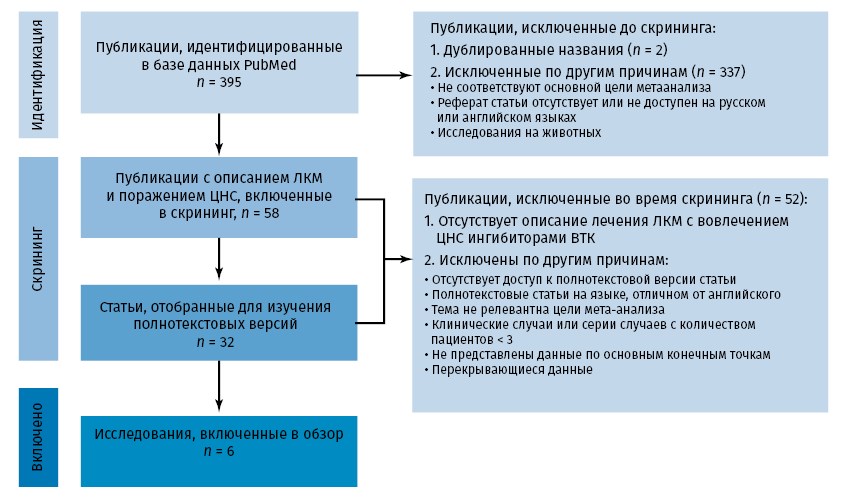
Background. Mantle cell lymphoma (MCL) is a highly aggressive disease characterized by rapid progression, with central nervous system (CNS) involvement reported in 1–4 % of cases, significantly worsening outcomes. Bruton tyrosine kinase (BTK) inhibitors have shown promising results in treating MCL; however, their efficacy in cases with CNS involvement (CNSi) remains controversial. This requires a systematic analysis of existing data to optimize therapeutic strategies.
Aim. To evaluate the efficacy of BTK inhibitors in patients with CNSi of MCL.
Materials and methods. A systematic search was conducted using the PubMed database, covering the period from January 1, 2013, to December 15, 2024. Inclusion criteria were as follows: morphologically confirmed MCL with CNSi, treatment with BTK inhibitors, and assessment of at least one therapeutic efficacy endpoint, including overall response rate, complete and partial response rates, overall survival, and hazard ratio estimates. Data analysis was performed in R (v4.4.2) using the meta package (v8.0–1). Combined metrics were calculated using fixed-effects or random-effects models, with 95 % confidence intervals (CIs) provided for all outcomes.
Results. The meta-analysis summarized data from six retrospective studies involving 170 patients with MCL and CNS involvement. The use of BTK inhibitors was associated with a 74 % reduction in the risk of adverse outcomes (HR 0,26; 95 % CI: 0,13–0,52; p = 0.0001) compared to intrathecal and standard immunochemotherapy. Combined rates of complete and partial responses to BTK inhibitors were 41,8 % and 36,2 %, respectively, with minimal heterogeneity between studies. The overall response rate reached 74,95 %, demonstrating the stability of therapeutic efficacy. The absence of significant statistical heterogeneity (I2≤37,9 %) supports the robustness of these findings.
Conclusions. Compared to intrathecal and standard immunochemotherapy, BTK inhibitors significantly improve response rates and reduce the risk of adverse outcomes in patients with MCL and CNSi. However, overall clinical outcomes remain suboptimal, underscoring the need for further research and the development of more effective treatment strategies.
Introduction. Non-Hodgkin’s lymphoma (NHL) is a large heterogeneous group of diseases with a high level of early diagnosis and a relative 5-year survival rate of 87 %. In contrast, primary cardiac lymphomas (PCL) are characterized by late diagnosis and high mortality rates.
Materials and methods. The article presents the successful experience of immunochemotherapy of intravital primary cardiac diffuse large B-cell lymphoma (DLBCL) in patient P., 68 years old.
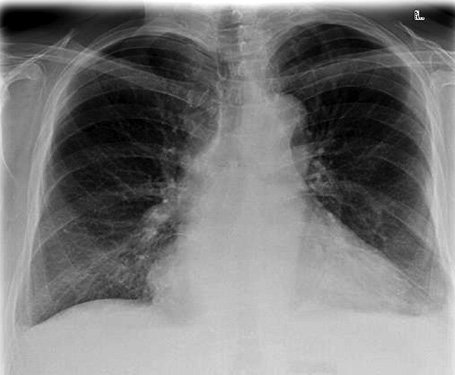
Results. Based on a comprehensive examination, including radiography of the lungs, ECG, ECHOCG, MSCT of the chest, MRI of the heart, PET/CT, the patient was prescribed 4 cycles of immunochemotherapy (IHT) according to the R-CHOP protocol, which led to partial remission. The continuation of the treatment was the implementation of another 4 cycles of IHT according to a similar protocol. According to the results of the treatment and dynamic observation, the patient achieved a total regression of the tumor size.
Conclusion. Primary cardiac lymphomas are extremely rare, accounting for no more than 1–3 % of all heart tumors and even less of all DLBCL localities. For this category of patients, it is important to make a diagnosis as early as possible, which largely determines the final outcome of therapy. Special attention in the diagnosis should be paid to a multidisciplinary approach, which includes the participation of doctors of various specialties. The absence of LV involvement and arrhythmias at the time of diagnosis is associated with an improvement in overall survival rates. The optimal choice of therapeutic tactics is chemotherapy, with the addition of anti-CD20 monoclonal antibody (mAbs), the preferred R-CHOP protocol. Surgical methods are not associated with an improvement in overall survival.
Cardiology
Introduction. A cardiomyopathy is a rare diagnosis in emergency care, although the pathology is not so unique. The study was conducted to determine the actual frequency of primary cardiomyopathies in emergency cardiology, to clarify the main clinical manifestations and outcomes of the disease, as well as the main factors influencing timely and accurate diagnosis.
Materials and methods. The authors analyzed the system of emergency cardiology care in a multidisciplinary city hospital for 3 years. The frequency of primary cardiomyopathies among patients referred for hospitalization due to emergency indications was determined during the time.
Results. In total, 52 patients with primary cardiomyopathy were hospitalized during the analyzed period. This accounted for about 1.5 % of all patients admitted to the emergency cardiology department. Dilated cardiomyopathy and hypertrophic cardiomyopathy were the most common, with 16 cases each (30,75 %). Stress-induced cardiomyopathy, also known as takotsubo syndrome, was slightly less common, with 11 cases. The main reasons for admission for patients with cardiomyopathies were acute coronary syndrome and acute decompensated heart failure, with 18 and 9 cases, respectively. Eight more patients were admitted in a critical condition, and the diagnosis «other cardiomyopathy» was given posthumously in these cases. In 12 of the cases, patients with dilatated or hypertrophic cardiomyopathy knew about their condition, but only one case of dilated cardiomyopathy had a referral diagnosis that matched the final diagnosis.
Conclusions. It has been shown that the most significant factor for timely diagnosis of cardiomyopathies is conducting an echocardiographic examination as soon as possible after the patient is admitted to the hospital.
Неврология
Multifocal motor neuropathy (MMN) is a rare immune-mediated disease of the peripheral nervous system manifesting as progressive asymmetric muscle weakness and motor conduction blocks. This article presents a clinical case of a patient with verified MMN in whom the use of rituximab was not accompanied by clinical improvement and was associated with further progression of paresis. Subsequent administration of intravenous immunoglobulin (IVIG) led to pronounced positive dynamics with an increase in muscle strength and a decrease in the severity of motor deficit.
Introduction. MMN is a rare dysimmune neuropathy clinically characterized by asymmetric muscle weakness, atrophy, and fasciculations with absent or minimal sensory impairments. The most significant diagnostic signs include the detection of IgM antibodies to ganglioside GM1 and the registration of motor conduction blocks during electroneuromyographic examination. IVIG is considered the mainstay of pathogenetic therapy for MMN, while the efficacy of other immunomodulatory drugs, including rituximab, remains insufficiently defined.
Materials and methods. We analyzed a clinical case of a female patient born in 1961 who was admitted with complaints of increasing weakness in the left hand, clumsiness during movements, and fasciculations in the muscles of the left upper limb. The diagnostic evaluation included a neurological examination, electroneuromyography, ultrasound examination of peripheral nerves and the brachial plexus, as well as magnetic resonance imaging. To clarify the nosological entity of the process, an analysis of the cerebrospinal fluid and a laboratory assessment of anti-GM1 antibodies were performed.
Results. The examination revealed motor conduction blocks outside typical compression sites, as well as an elevated titer of anti-GM1 antibodies, which confirmed the diagnosis of MMN. The administration of rituximab, necessitated in part by organizational and economic limitations of therapy, did not lead to clinical stabilization. After transferring the patient to IVIG therapy, clear positive dynamics were noted in the form of reduced severity of paresis and increased muscle strength.
Conclusion. The presented clinical observation emphasizes the importance of timely diagnosis of MMN and early initiation of pathogenetic therapy. In this case, the use of rituximab did not provide clinical stabilization, whereas IVIG demonstrated high therapeutic efficacy. Improving the availability of immunoglobulin therapy and physicians’ awareness of MMN is essential to prevent the progression of motor deficit and patient disability.
Онкология, лучевая терапия
In last years, the attention of researchers is focused on the study of carcinogenesis and differentiation tumors of colorectal cancer (CRC). Mechanisms of the onset and aggressiveness of the disease are gaining more and more arguments. The biology of tumor becomes more understandable and introduces its changes into the system of treatment of patients with CRC. The heterogeneity of tumor phenotypes was based on modern molecular and pathomorphological methods of diagnosis.
Rheumatology
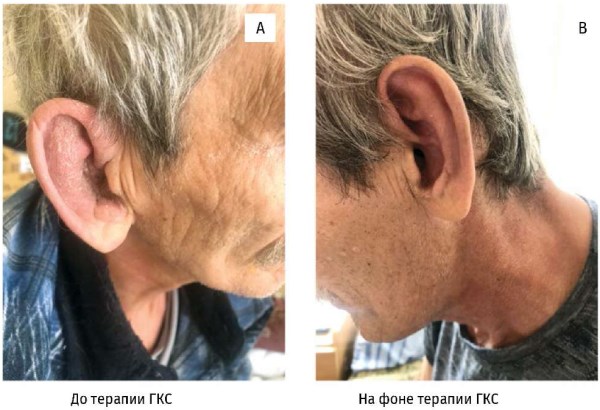
Recurrent polychondritis (RP) is a rare systemic inflammatory disease that is difficult to diagnose and treat due to a number of reasons: insufficient knowledge about the disease due to its low prevalence, poor awareness among doctors, lack of specific clinical manifestations in the early stages of the disease, lack of specific laboratory markers, and lack of international and Russian clinical guidelines for managing such patients. The article presents a review of the literature on the diagnosis and treatment of RP, as well as a clinical case characterized by a very rapid progression of the disease: onset with damage to the tracheobronchial tree and involvement of the sternocostal and costovertebral joints, sensorineural hearing loss, auricular chondritis, and rapid eye damage with severe panuveitis and vision loss. This required the administration of a genetically engineered drug in the form of an anti-inflammatory drug.
Сердечно-сосудистая хирургия
Introduction. For over 30 years, endovascular treatment of abdominal aortic aneurysms has been one of the main methods of treating this pathology. Despite the apparent ease of intervention, complications, in addition to aneurysm rupture and graft dislocation, developing in the postoperative period can lead to severe and sometimes fatal consequences.
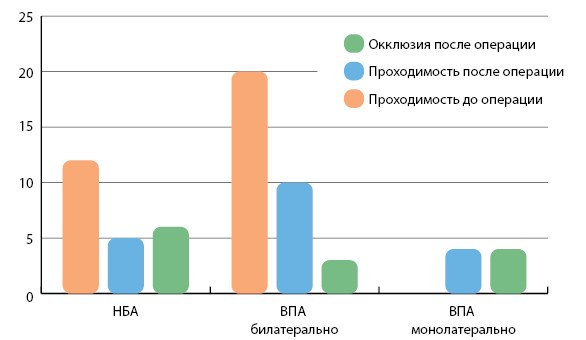
Material and methods. The study included 22 patients operated on from 2017 to 2022 in the Vascular Surgery Department of the Leningrad Regional Clinical Hospital. The main evaluation parameters were patient survival after surgery, patency of the structure in the immediate (up to 30 days) and remote (more than 1 year) observation periods, patency of the inferior mesenteric artery, as well as internal iliac arteries. In addition to these parameters, the presence of complications in the immediate and remote periods was analyzed, both from the side of the performed surgical intervention and from the standpoint of cardiovascular pathology. The analysis was performed by face-to-face consultation of patients, followed by control MSCT angiography of the abdominal aorta, its branches and arteries of the lower extremities.
Results. In the late postoperative period, it was possible to evaluate 20 (90,9 %) patients out of 22. In 2 patients, fatal myocardial infarction developed at 1 and 3 years after the intervention. In 1 case (4,5 %), 2 years after the operation, thrombosis of the left branch of the endograft was noted with the development of chronic arterial insufficiency stage III according to A.V. Pokrovsky. Patency of the inferior mesenteric artery was detected only in 5 cases (25 %) out of 11 at the preoperative stage. In turn, the internal iliac arteries were bilaterally occluded in 2 (10 %) cases.
Conclusion. Endovascular treatment of abdominal aortic aneurysm allows avoiding multi-hour traumatic interventions. However, as long-term research results show, the choice of this method should be balanced and based on an analysis of many factors that may affect the further course of the disease.
Хирургия
Introduction. The aim of the present study is to assess the results of the reconstruction of ablative head and neck defects with free flaps.
Materials and methods. From 2006 to 2023 year 264 revascularization free flap (167 PE-regulatorily femoral, radial 82, 5 that rektorining, 4 blade, 3 fibula, ulna and 2 1 jejunum) were used in surgical treatment of 259 patients in age from 30 to 81 year. 199 patients underwent upfront surgery. 26 patients were operated due to recurrences. There were 8 cases of secondary reconstruction. Squamous cell carcinoma was a predominant type of tumor — 216 cases (92,7 %). In the vast majority of cases the reconstruction of upper aerodigestive tract was performed.
Results. Postoperative lethality was 1,3 %. 146 patients (62,7 %) had an uncomplicated postoperative period. 87 subjects (37,3 %) had at least 1 complication, 26 of them — multiple. 40 (17,2 %) patients required return to the operating room. 18 flaps were lost, so the success rate was 92,3 %. With gaining practical experience the decrease in the rate of complications (since 52,0 to 32,3 %), operative time (since 578,8 to 402,41 minutes), days of hospitalization (since 25,79 no 19,82 days) and flap loss (since 16 to 6 %) were observed.
Conclusion. The technology of free flap reconstruction can be implemented in a public hospital with an acceptable rate of complications.
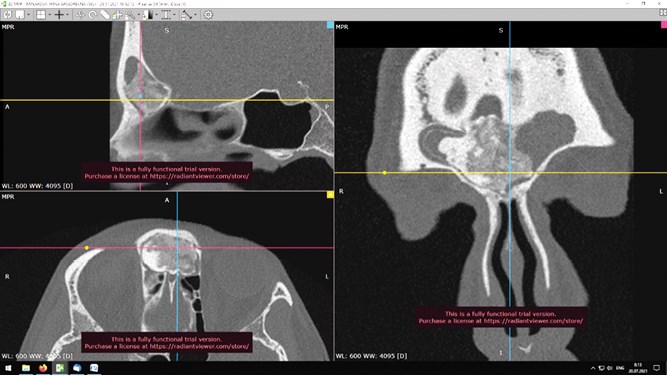
Osteomas of the paranasal sinuses are benign lesions of the skull, accounting for 0.7 % of all paranasal sinus tumors (PNS). They are typically asymptomatic and are primarily diagnosed incidentally on CT scans. The most common symptoms are headache, nasal discharge, and signs of PNS inflammation. Osteomas are often associated with nasal polyposis or mucopyocele, which are generally considered secondary lesions. We also consider osteoma secondary to inflammation associated with nasal polyposis and mucopyocele [1]. We conducted a retrospective analysis in our ENT department from January 2021 to December 2023. In our cohort of 876 patients with nasal polyposis, we found 13 cases of osteoma, with an incidence of 7.21 %. The mean age was 47.23 years, the male to female ratio was 3.1:1.1. In 9 cases, the osteoma was located in the frontal sinus, 3 were located on the lateral part of the ethmoid roof (35 %), and 2 extended from the ethmoid bone to the frontal sinus. The mean tumor size was 10.02 ± 4.54 mm. The collected data may indicate that chronic mucosal inflammation can cause bone changes and ultimately lead to osteomas [2]. We can assume that osteomas of the paranasal sinuses may be a complication of nasal polyposis. We present a complex clinical case of nasal osteoma removed using a bicoronal approach to the paranasal sinus in a single stage with the creation of a Draf 3 rhinostomy.
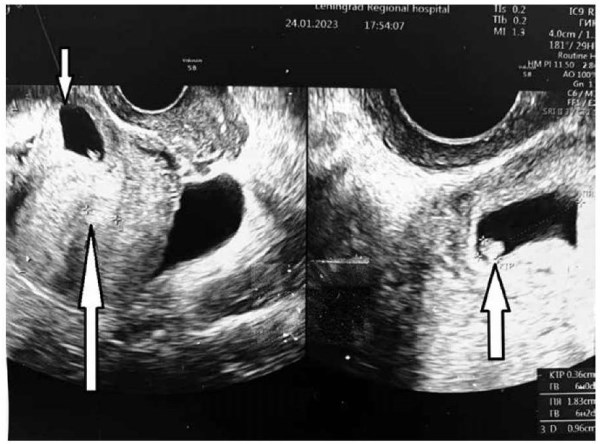
Introduction. The problem of choosing treatment tactics for not so rare forms of ectopic pregnancy, such as pregnancy in the uterine scar and cervical localization, is far from its final solution. At the present stage, minimally invasive techniques and new organ-preserving technologies are emerging that help preserve the reproductive function of patients and avoid serious complications, in particular massive blood loss, which can often accompany these conditions.
The introduction of such a relatively new method as selective embolization of the uterine arteries into the clinical practice of doctors for the purpose of treating ectopic, rare forms of ectopic pregnancy has a number of advantages and shows a positive clinical and prognostic effect.
Materials and methods. The study included 2 cases of ectopic pregnancy of cervical localization and in the uterine scar after cesarean section, and first-stage therapy using temporary selective embolization of the uterine arteries, followed by evacuation of the fertilized egg from the uterine cavity.
Results and conclusion. A personalized approach to the treatment of rare forms of ectopic pregnancy, in particular using selective temporary embolization of the uterine arteries, as well as other methods, is currently available in the arsenal of an obstetrician-gynecologist and helps to choose the optimal method of therapy in patients of reproductive age.
Currently, there is no ideal treatment for this difficult clinical situation. As you know, each treatment method has its own indications, contraindications and complications. Therefore, a personalized approach to therapy is becoming increasingly relevant.

ISSN 3033-9669 (Online)